
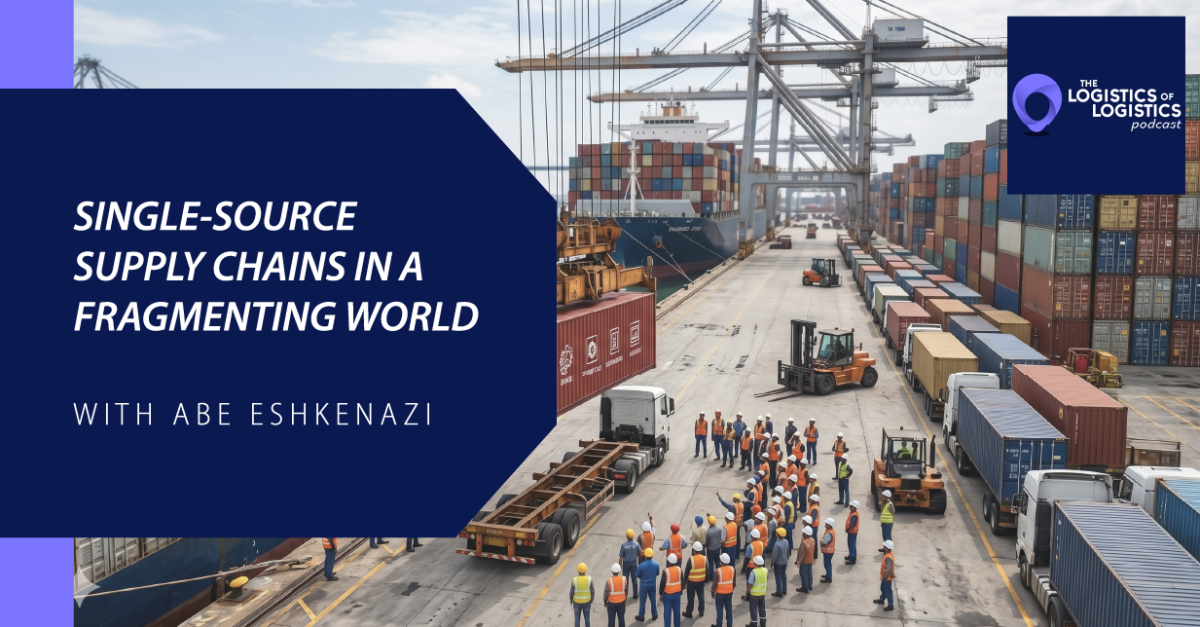
In “Single-Source Supply Chains in a Fragmenting World”, Joe Lynch and Abe Eshkenazi, Chief Executive Officer at ASCM, discuss the shift from low-cost efficiency to resilient, regionalized networks. They emphasize that visibility and talent are now the primary tools for navigating global disruption.
About Abe Eshkenazi
Abe Eshkenazi, CSCP, CPA, CAE is chief executive officer at ASCM, the largest organization for supply chain and the global pacesetter of organizational transformation, talent development and supply chain innovation. During his tenure, ASCM has significantly expanded its services to corporations, individuals and communities; its revenue has more than doubled; and three mergers were completed in response to heightened industry awareness and the vast and ongoing global impact of supply chains. A trusted industry leader, Abe has served as a longstanding source of thought leadership on emerging trends impacting the supply chain space. He’s championed supply chain careers via upskilling and pushed for a broader understanding of supply chain space to those outside of the industry. He was a driving force in the development of the documentary, The Chain: How the World Works, a six-part series aimed to demystify the supply chain industry and highlight its importance in everyday life. Previously, Abe was managing director of the Operations Consulting Group of American Express Tax and Business Services. Abe holds a Master of Business Administration from Northwestern University, Kellogg Graduate School of Management; a Master of Business Administration from DePaul University; and a bachelor’s degree in business from Northeastern Illinois University.
About the Association for Supply Chain Management (ASCM)
The Association for Supply Chain Management (ASCM) is the global pacesetter of organizational transformation, talent development and supply chain innovation. As the largest association for supply chain, ASCM members and worldwide alliances fuel innovation and inspire accountability for resilient, dynamic and sustainable operations. ASCM is built on a foundation of world-class APICS education, certification and career resources, which encompasses award winning workforce development, relevant content, groundbreaking industry standards and a diverse community of professionals who are driven to create a better world through supply chain.
About The Chain: How the World Works – ASCM Docuseries
“The Chain: How the World Works” is a new docuseries produced by The Association for Supply Chain Management (ASCM), available now on Amazon Prime. “The Chain” is a bold, engaging exploration of the global supply chain and the people who keep it moving. Through expert interviews, real-world stories, and cinematic storytelling, it offers a rare behind-the-scenes look at the systems that power our world. The six-part series dives deep into the challenges and innovations shaping the future of supply chains revealing the hidden infrastructure behind everyday life, from the food in your supermarket to the journey of your favorite pair of jeans. Each episode focuses on a unique topic, for example “The Sports Industry Isn’t All About the Game—It’s a High-Stakes, Global Supply Chain” and “The Hidden Journey of Pain Relief: How the World’s Morphine is Made, Tracked, and Unequally Shared” ASCM’s docuseries aims to educate the public, elevate the profession, and highlight the critical role supply chains play in global stability and sustainability. How to watch: The Chain: How the World Works docuseries on Amazon Prime or learn more at ASCM.org.
Key Takeaways: Single-Source Supply Chains in a Fragmenting World
- In “Single-Source Supply Chains in a Fragmenting World”, Joe Lynch and Abe Eshkenazi, Chief Executive Officer at ASCM, discussthe shift from low-cost efficiency to resilient, regionalized networks. They emphasize that visibility and talent are now the primary tools for navigating global disruption.
- The Shift from Invisible to Visible: Historically, supply chains were only noticed when they failed. Abe emphasizes that we are moving toward a world where the “invisible” story of a product—its origin, environmental impact, and labor conditions—is now a core consumer and regulatory demand.
- Defining the “Choke Point” Risk: A single-source supply chain creates a critical vulnerability where an entire operation depends on one supplier, region, or facility. While efficient for cost, these “choke points” (like Taiwan for chips or China for pharmaceutical ingredients) offer no alternatives when geopolitical or environmental disruptions occur.
- The “Visibility Gap” Beyond Tier 1: Most organizations lack insight into their Tier 3 and Tier 4 suppliers. Abe notes that while visibility at the top level has improved, the deepest disruptions often happen deep in the sub-tiers where vendors lack the resources to handle shocks.
- Digital Transformation vs. Talent Investment: While companies are heavily investing in technology like AI and ERP systems for better data, there is a significant gap in human talent. Technology is only as effective as the professionals who possess the critical thinking skills to leverage it.
- The Re-balancing of “Just-in-Time” to “Just-in-Case”: The industry is moving away from a pure focus on speed and low cost toward “risk-adjusted” decision-making. This includes building inventory buffers, creating flexible contracts with “tariff clauses,” and ensuring optionality in logistics routes.
- Regionalization and Shorter Supply Chains: Geopolitical fragmentation is pushing the world toward a “multipolar” model. Supply chains are becoming shorter and more regional (nearshoring) to improve security and sustainability, even if this results in higher costs that must be absorbed.
- Collaboration as a Strategic Skill: Supply chain management is no longer a siloed back-office function. Success now requires “soft skills” to lead cross-functional collaboration between the Chief Supply Chain Officer, CFO, and Chief Sustainability Officer to balance financial health with operational resilience.
Learn More About Single-Source Supply Chains in a Fragmenting World
Association for Supply Chain Management (ASCM) | Linkedin
Association for Supply Chain Management (ASCM)
The Chain: How the World Works | Docuseries on Prime Video